Seeing Youth Potential, Witnessing Her Growth—2025 “Girls Shaping Tomorrow Program” Successfully Held
Date:2025-12-1 10:55:55 Views:
In response to the global agenda of empowering women through digital technology and advancing the United Nations Sustainable Development Goals on gender equality, the 2025 “Girls Shaping Tomorrow Program” was successfully held in Beijing from May to November 2025. The program also aimed to implement the requirements of the Women in Science and Technology Innovation Action—Beijing Initiative to support the female science talent. The program was organized by the Beijing Women’s Federation and the Beijing Association for Science and Technology. It was hosted by the Beijing Women’s International Exchange Center, the Beijing Science Center, the Foreign Language Teaching and Research Press, and the Peking Mao Yi-sheng Science and Technology Education Foundation. The program was themed “Seeing Youth Potential, Girls Shaping Tomorrow.” Through signature activities, such as Innovation Thinking Camps, Science Women in Campus Initiatives, Model United Nations, and Science and Technology Creativity Workshops, it offered female adolescents a platform to explore new energy technologies, expand their international perspectives, and develop into globally competent female science talent.
Her Innovation Literacy: Walking with Green Technologies, Cultivating Creative Thinking
In 2025, the program continued to offer the Innovation Thinking Camp, targeting student representatives from Beijing ESBNU Huaxia Girls’ Middle School. The school serves as a key base for women’s and children’s development in the capital. Experts and scholars guided participants through global current affairs, trending topics, and cross-cultural communication. This helped female adolescents deepen their understanding of the global new energy technology landscape while fostering innovative and global thinking. Under expert mentorship, students formed teams to tackle real-world energy challenges. They analyzed differences in national energy policies and technical deployment difficulties, explored funding pathways, and designed eco-friendly solutions. Through collaborative debates and problem-solving, participants gained a systematic understanding of global energy issues. They also experienced firsthand the entire process from innovation to implementation. This experience not only sharpened their innovative thinking but also strengthened their leadership, teamwork, and problem-solving skills.
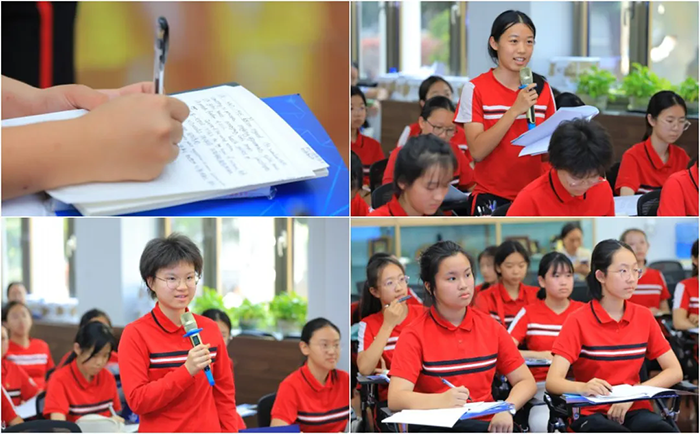
Jiang Yushan, a student from Class 4, Grade 8, shared, “There are very few opportunities to deeply discuss renewable energy, as it is usually considered a major international issue. Through the learning and discussions in this camp, I realized that the development of renewable energy is closely connected to our daily lives. I also learned to view problems from a global perspective. This shift in thinking has been very meaningful.”
Her Growth Role Models: Learning from Exemplars, Empowering Scientific Dreams
Based on feedback from previous participants and survey results, the “Her Growth Role Models” segment has emerged as one of the most popular parts of the program, inspiring girls to pursue scientific aspirations through exemplary figures. This year, women scientists from emerging new energy fields, such as nuclear and biomass energy, along with female representatives from international organizations, were invited to share cutting-edge knowledge and personal stories about their research and life choices. These figures were no longer distant names in scientific papers but became relatable and inspiring role models.
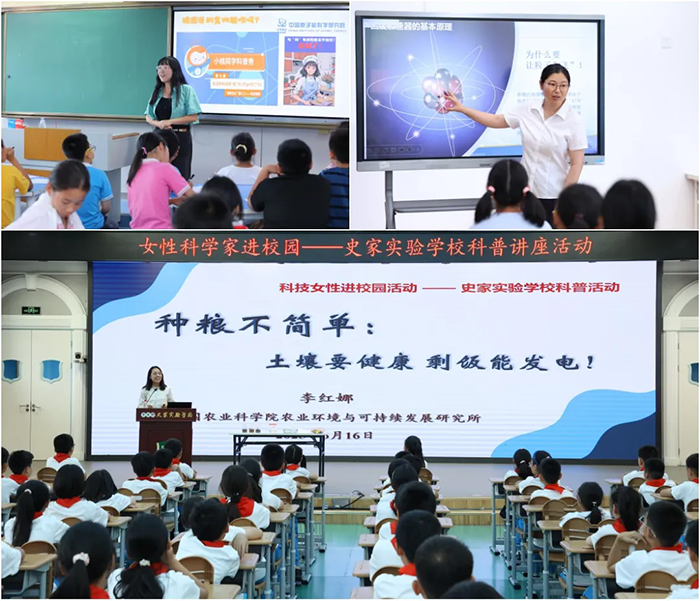
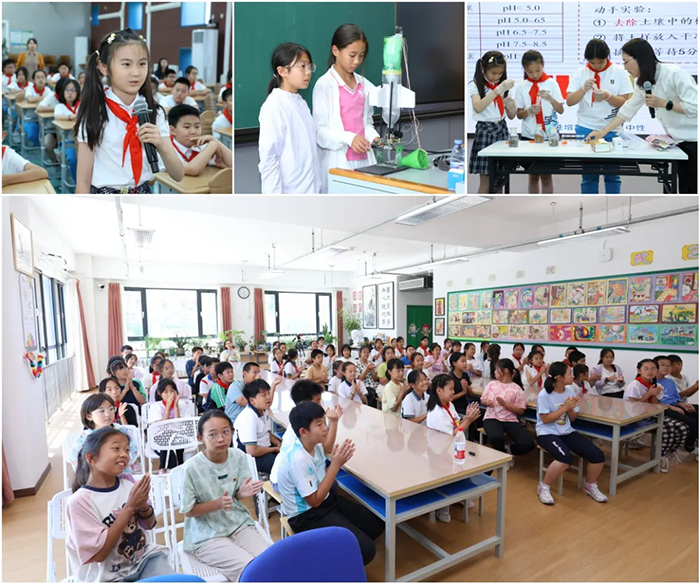
Researcher Li Hongna from the Chinese Academy of Agricultural Sciences explained the importance of healthy soil and the technologies used to convert kitchen waste into clean energy. Her demonstration allowed students to directly experience the magic of transforming waste into value. Meanwhile, researchers Wei Su’min and Ren Xiuyan from the China Institute of Atomic Energy introduced the principles of nuclear energy, such as particle acceleration, and explained breakthroughs across multiple fields. They also showcased the applications of nuclear technology in everyday life, from medical to food safety scenarios, helping students become familiar with it and inspiring them to explore frontier technologies.
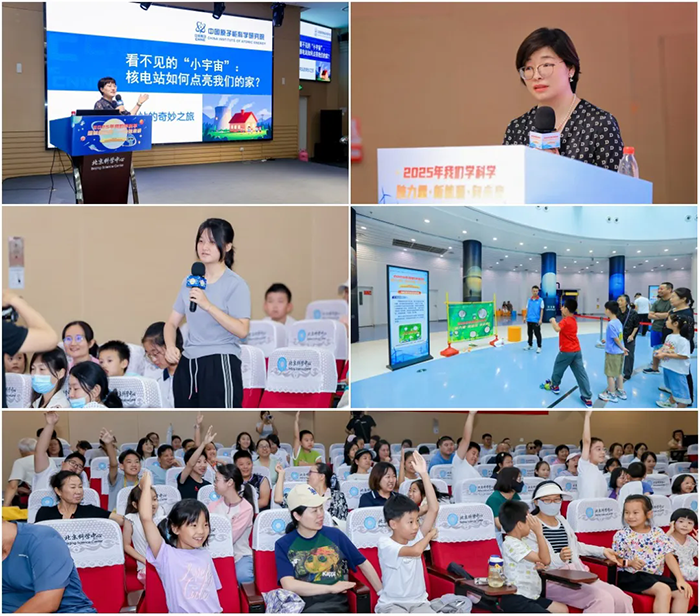
During the summer, the program partnered with the Beijing Science Center to host two special sessions for adolescents and their parents, both online and offline. Researcher Jiang Xiaoyan from the China Institute of Atomic Energy explained nuclear power generation in an accessible way. She compared the atomic world to a “mini-universe” to illustrate how nuclear energy can be safely converted into electricity. Investigator Xiao Lili from the National Atomic Energy Authority shared her experiences in bilateral and multilateral international cooperation in the nuclear field and introduced participants virtually to the International Atomic Energy Agency (IAEA). She also demonstrated how international organizations support the development of nuclear energy, broadening students’ global perspectives.
Through direct interactions with role models, participants witnessed firsthand how women’s meticulousness, resilience, and intelligence can shine in laboratories and research projects, driving global change. One student exclaimed, “The stories of women scientists make me believe that girls can also excel in the field of science!” The science experiments and interactive exhibits on new energy allowed students and parents to explore the wonders of energy conversion.
Her International Perspective: Engaging with the World, Developing Global Vision
The program introduced an innovative Model United Nations (MUN) activity. Participants assumed the roles of diplomats from various countries and engaged in debates and negotiations on “Promoting Global Cooperation in Renewable Energy.” This activity helped foster international awareness and a deeper understanding of global governance.
Students, dressed formally and carrying national flags, adhered strictly to UN procedures. They negotiated on issues such as funding support for developing countries, the establishment of technology-sharing platforms, and regional energy cooperation. Through discussions and debates, they reached a consensus and collaboratively drafted and passed resolutions.
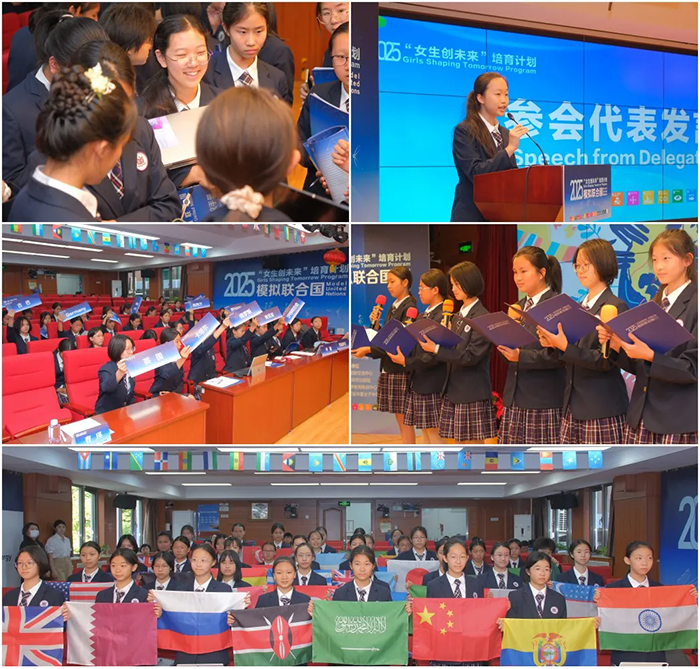
This immersive experience trained participants in language and critical thinking. It also broadened their global perspectives and connected the classroom to real-world international engagement. Through the BUM activity, they learned how to make their voices heard in global affairs and contribute to developing clean energy solutions. One student commented, “Achieving consensus among countries is harder than sticking to a single stance. This experience taught me that women can also play a significant role in global sustainable development. In the future, I hope to contribute to addressing global challenges.”
Her Science Creativity: Turning Dreams into Reality
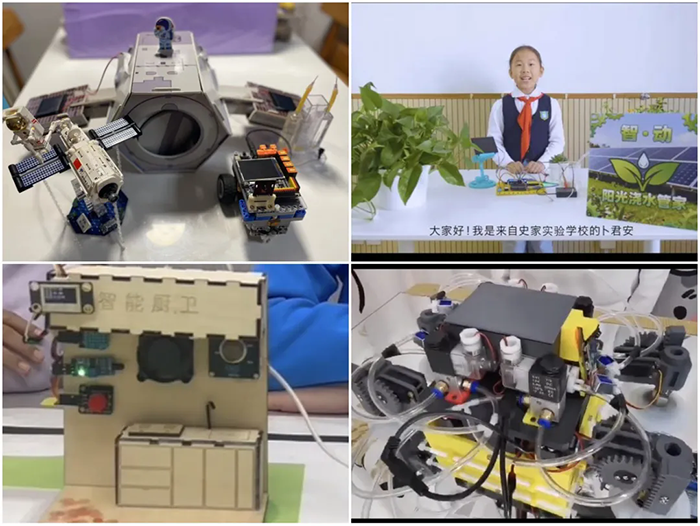
To inspire female adolescents to apply scientific knowledge in practical ways, the program invited students from pilot schools to participate in the “Her New Energy Innovation” thematic exploration. Focusing on renewable energy and smart technology, students designed innovative projects. The most outstanding works were selected for display at the Beijing Primary and Secondary School Science Festival.
In the field of renewable energy, student projects addressed real-world challenges. The “Space Station Energy System” integrated foldable solar panels with a water electrolysis oxygen generator, simulating energy cycles in a space environment. The “Wind-Powered Lighthouse Model with Smart Warning” offered low-cost electricity solutions for remote areas, addressing local lighting challenges. The “Solar-Powered Intelligent Irrigation System” used sensors and automated controls to manage water efficiently and sustainably, promoting green agricultural development.
In intelligent technology, projects seamlessly combined creativity and practicality. The “Bionic Gait Climbing Robot” could perform vertical climbing and high-altitude operations, offering innovative solutions for work in hazardous environments. The “Kitchen Safety Monitoring System” monitored smoke levels and fire risks in real time, ensuring home safety. Meanwhile, the “Planetary Science Education System” used color recognition and voice broadcast functions to make learning astronomy more fun and accessible.
These projects reflect the students’ passion for science and exploration, as well as their practical application of sustainable development principles.
Every girl has the potential to change the world. The 2025 “Girls Shaping Tomorrow Program” offered female adolescents a platform to explore science, connect with the world, and build confidence. Here, science meets dreams, youths resonate with green development, and ambitious young girls gain access to the future. In doing so, the program nurtured future female talents with scientific literacy, innovative spirit, and global responsibility.
The program also received support from the China Institute of Atomic Energy, the China Association for International Science and Technology Cooperation, the Beijing Youth Innovation Academy, the Beijing Women’s Association for Science and Technology, the Capital Association of Women Professors, and the WIE R10 Beijing Affinity.