11th Beijing Women’s People-to-People Diplomacy Capacity-Building Training Program Successfully Held
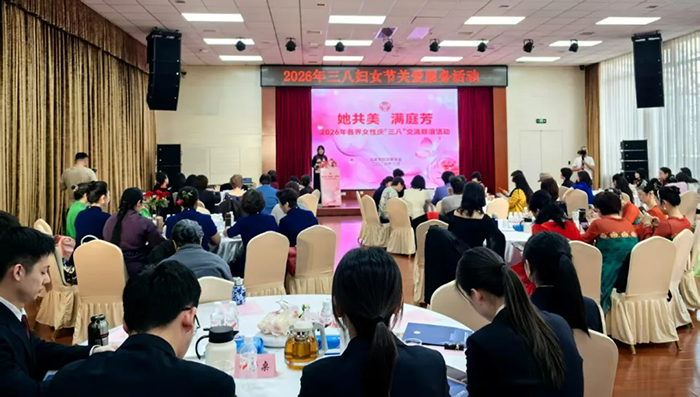
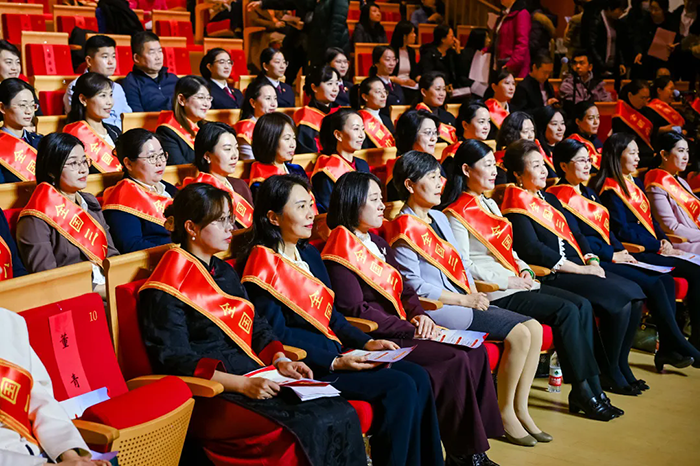
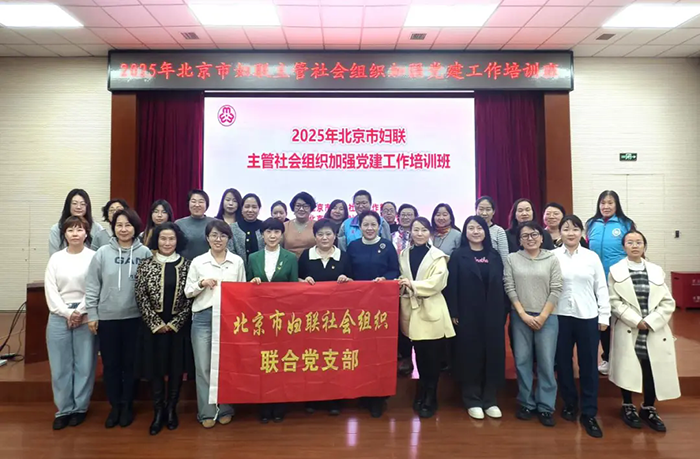
Date:2026-9-18 9:31:31 Views:To thoroughly implement the guiding principles of General Secretary Xi Jinping’s keynote speech at the Global Summit of Women, further strengthen the political guidance and professional capabilities of Beijing’s female foreign affairs workforce, and support Beijing’s development as an international center for exchanges, the 11th Beijing Women’s People-to-People Diplomacy Capacity-Building Training Program was successfully held on September 16-17. Co-hosted by the Beijing Women’s Federation and the Foreign Affairs Office of the People’s Government of Beijing Municipality, the training program brought together more than 60 key foreign affairs personnel from women’s federations at the municipal and district levels, as well as representatives of the capital’s development bases for women and children. Lei Xiaoning, Member of the Leading Party Members Group and Vice President of the Beijing Women’s Federation, attended the opening ceremony and delivered a mobilization speech.
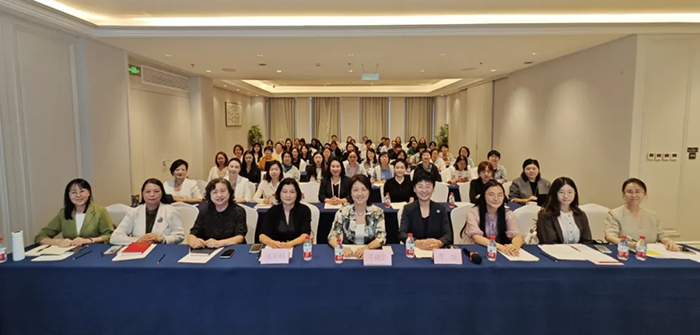
As part of the Beijing Municipal Foreign Affairs Office’s 2026 Talent Training Program for the Development of Beijing as an International Center for Exchanges, the curriculum was closely tailored to the practical needs of the capital’s women’s people-to-people diplomacy. By combining theoretical lectures, experience sharing from development bases, and field-based training, the program aimed to solidify participants’ theoretical foundation for international exchanges and enhance their practical capabilities of duty performance.
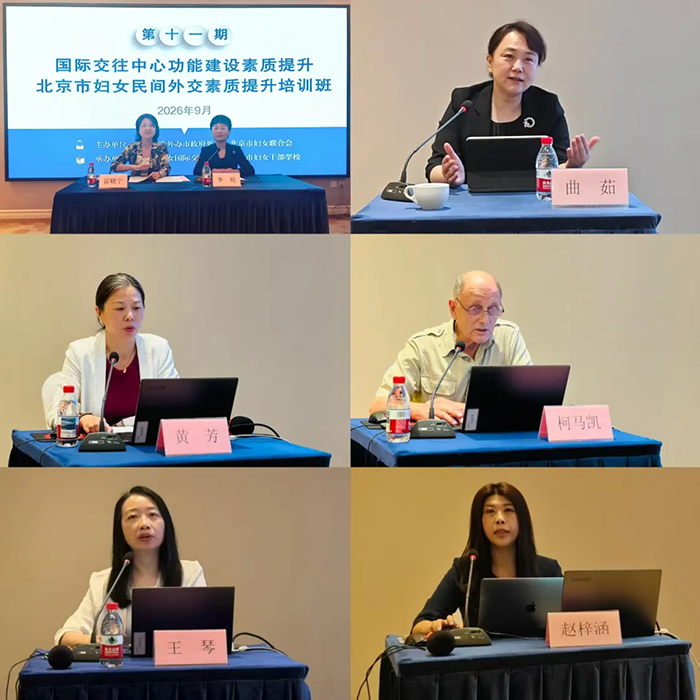
During the classroom sessions, Qu Ruli, professor at Beijing International Studies University and director of the Capital Institute for International Cultural Communication, drew on a global governance perspective and communication theories. Using cases such as Chinese and international families celebrating the International Day of Families together in Beijing, and the overseas livestreaming by “Beijing Qiaoniang”, she outlined the logic and approaches for telling compelling stories about women in Beijing to the international community.
Huang Fang, director of the International Language Environment Development Division of the Beijing Municipal Foreign Affairs Office, and Michael Crook, chairman of the International Committee for the Promotion of Chinese Industrial Cooperatives, highlighted the importance of foreign-language services from the perspectives of policy standards and cross-cultural communication. Focusing on service scenarios for women and children, they explained high-frequency foreign-language expressions and common errors, while analyzing standards for foreign-language signage and key considerations for services involving international visitors.
Wang Qin, deputy director and associate research fellow at the Center for Media and Women’s Studies at Communication University of China, and Zhao Zihan, member of the Party Committee and director of the All-Media Editorial Office at China Women’s News, focused on ideological guidance. They discussed work principles and key capabilities for international exchanges in the new era, encouraging participants to maintain a strong sense of bottom-line thinking and enhance their awareness of risk prevention and control.
Throughout the sessions, lecturers facilitated interactive discussions, allowing participants to actively share experiences and reflections from their international exchange projects. This mutual learning and exchange of ideas further consolidated the training outcomes.
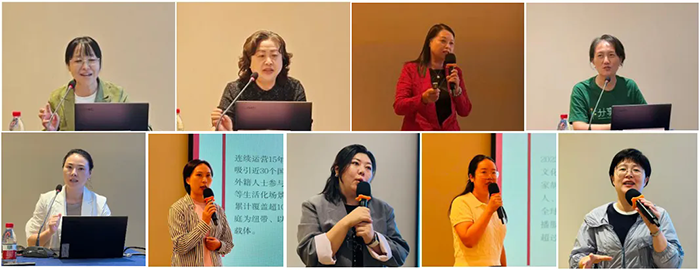
During the experience-sharing session, outstanding representatives from the capital’s development bases for women and children exchanged best practices. Yang Xiujuan, Party secretary and curator of the Museum of Chinese Gardens and Landscape Architecture, shared best practices in conducting international cooperation and exchanges based on traditional Chinese garden culture. Tian Fengyin, curator of the Great Wall Art Museum, recounted how Great Wall-themed oil paintings have conveyed the spirit of Chinese women on the international stage. Lei Haihuan, director of Beijing Sino-Foreign Friendship Kindergarten, shared insights gained from showcasing high-quality Chinese preschool education to international audiences. Shi Yan, executive director of Share Harvest (Beijing) Agricultural Development Co., Ltd., introduced practical efforts to localize international agricultural concepts.
Other participants also actively engaged in discussions. Tang Tang, director of the Haidian Activity Center for Women and Children, shared improvement measures and reflections based on two recent assignments involving the reception of international guests. Grounded in real-world cases, these presentations provided vivid references for participants to apply in their people-to-people diplomacy work.
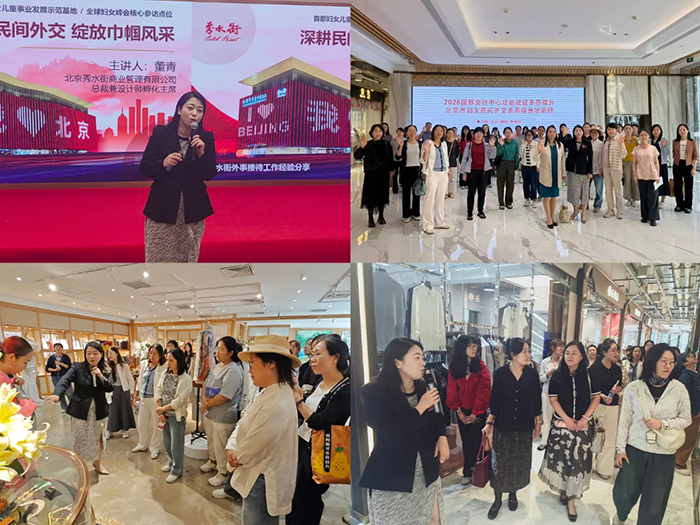
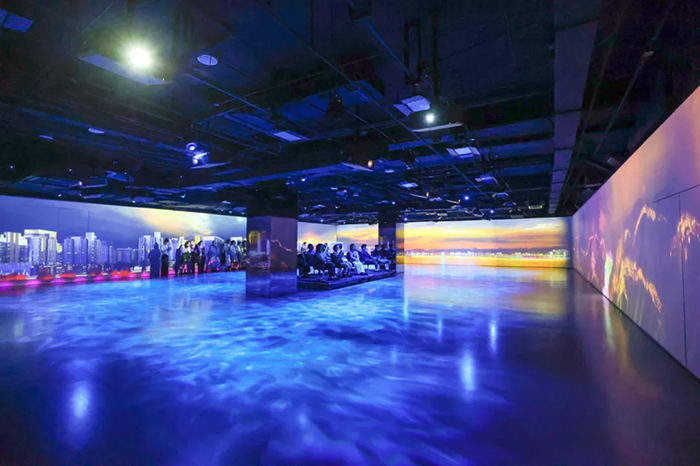
The training program also featured specially designed field training on foreign affairs activities. Participants visited Xiushui Street, a key window for foreign affairs visits. Dong Qing, chair of the Xiushui Street Designer Incubation Center, systematically introduced best practices for supporting foreign affairs visits, covering event preparation, reception procedures, and contingency planning.
She guided participants through the full reception process, allowing them to observe firsthand the working methods and techniques of international exchanges. This experience enhanced their capabilities in foreign affairs reception and broadened their approaches to women’s people-to-people diplomacy.
Participants described the training as fast-paced, information-rich, and broad in scope. They noted that the lecturers effectively bridged professional theory with real-world frontline practices and case studies, presenting complex topics in an accessible manner while delivering highly practical insights.
Participants also said that the training helped them break out of established mindsets. They found that the perspectives and analyses directly addressed challenges and blind spots in their work, providing inspiring new ideas and perspectives for their future work in international exchanges.
The training program was co-organized by the Beijing Women’s International Exchange Center and the Beijing Women’s Cadre School. As a flagship initiative for Beijing’s women’s foreign affairs work, the Beijing Women’s People-to-People Diplomacy Capacity-Building Training Program has been held for 11 consecutive sessions. It continues to cultivate women with a global perspective to serve as people-to-people diplomacy ambassadors, continuously enhancing the capabilities and effectiveness of women’s people-to-people diplomacy and contributing women’s strength to the high-quality development of Beijing’s women’s people-to-people diplomacy.