2026 Zhongguancun Women’s Power Forum Held
Date:2026-11-6 14:35:20 Views: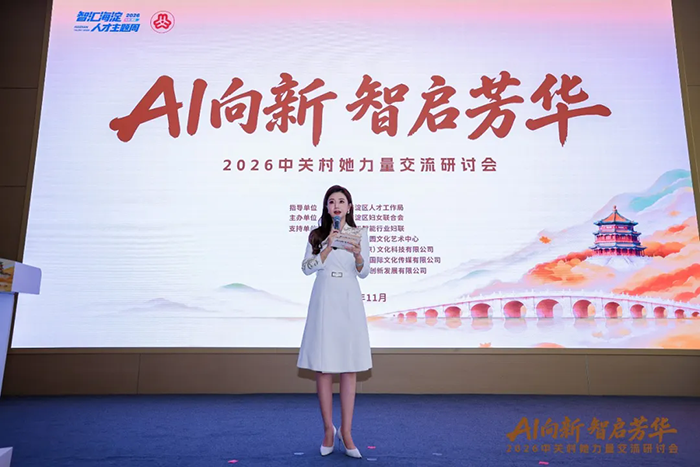
On November 5, the sixth Zhongguancun Women’s Power Forum was held at the Sanshan Wuyuan Cultural Arts Center in Haidian District.
As part of the 2026 “Smart Talents, Smart Haidian District” Talent Week, this year’s forum was held under the theme “AI for a New Future, Intelligence Unleashing Women’s Potential.” It focused on the roles and positioning of women innovators in applying artificial intelligence across industries. Female representatives from education, governance, general-purpose large models, healthcare, venture capital and other fields were invited to exchange ideas in an informal roundtable setting. Themed presentations were linked by a series of questions raised by women, highlighting the professional expertise and practical contributions of women in Haidian District on the front lines of AI development.
Zhou Zhijun, Secretary of Party Leadership Group and Chairwoman of Beijing Women’s Federation, attended the event and delivered remarks. Relevant officials from Haidian District, outstanding women in science and technology, female entrepreneurs from the district, as well as chairwomans of women’s federations at the subdistrict and township levels, also attended the event.
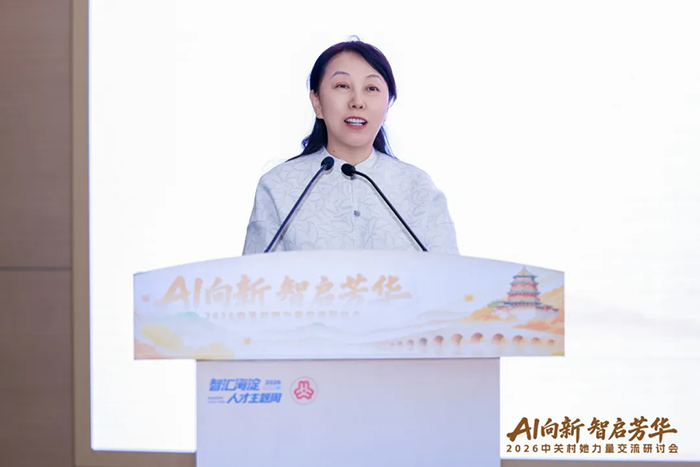
In her address, Zhou Zhijun called for continued efforts to advance women’s participation in scientific and technological innovation in line with Beijing’s development as a national political center, cultural center, international exchange center and center for scientific and technological innovation. She proposed that the “Better Life Academy” Alliance explore AI applications that are both ethically sound and people-centered, and called for implementing Beijing’s 15th Five-Year Plan for Women’s and Children’s Development. She also called for empowering women in science and technology through financial support, talent development and other measures. She urged women scientists and technologists to incorporate women’s perspectives and humanistic care into R&D and ethical governance, and called on women’s federations at all levels to proactively integrate their services into industrial, innovation and talent chains, pooling women’s strength to support Beijing’s development as an international center for scientific and technological innovation, so that women’s talents and achievements advance in step with the capital’s high-quality development.
Expert Insights: Addressing the Questions Facing Women in the New Era
Writing a New Chapter in Development
“When machines begin to have a ‘mind,’ how can humans hold on to their own?” “As access to knowledge becomes even more convenient, what should children learn?” “With AI entering hospitals, how many trips can ordinary people actually save?” “Technology is advancing rapidly, but how can rules keep up?” “A product is well made, but no one is willing to pay for it. Where does the problem lie?” Five guest speakers, each representing a key field of AI empowerment, responded to these questions with insights from their own frontline experience.
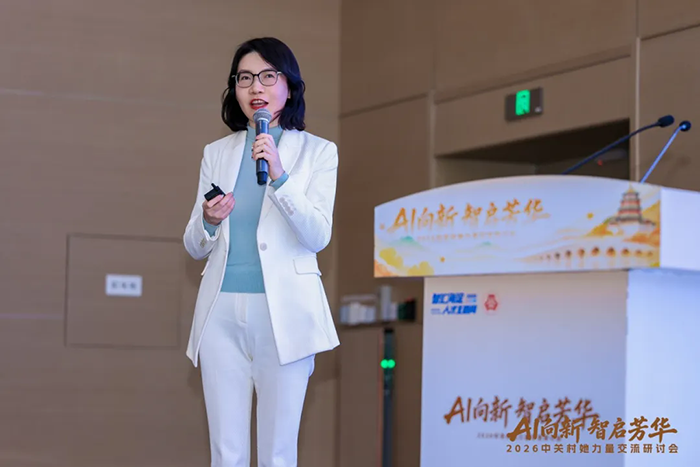
Dong Le, Executive Vice President of the Beijing Institute for General Artificial Intelligence and part-time Vice Chairwoman of the Beijing Women’s Federation, argued that embodied intelligence should not merely enable machines to perform tasks. It should also give machines a sense of purpose, so that they understand boundaries and make sound judgments in specific contexts.
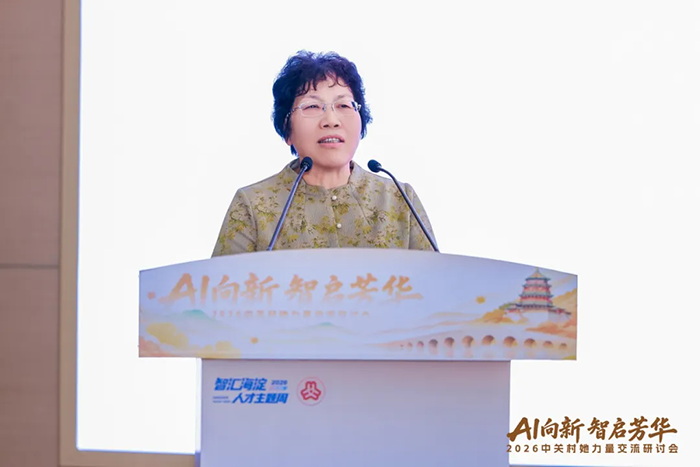
Chen Li, Professor at Beijing Normal University, noted that artificial intelligence and the cyberspace underpinning it are having a transformative impact on education and driving its digital transformation. Education is shifting from the school-based system of the industrial era to a lifelong learning system in the AI era. This transition presents both opportunities and challenges that deserve close attention.
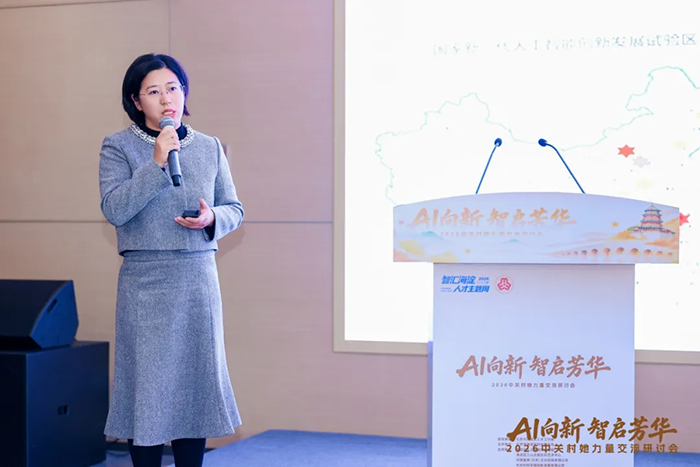
Zhang Fang, Associate Professor at the School of Public Policy and Management, Tsinghua University, focused on making algorithmic decision-making traceable, intervenable and accountable. Against the backdrop of AI’s accelerating adoption in schools, hospitals and government service centers, she addressed the governance challenge of how rules can keep pace with technological progress.
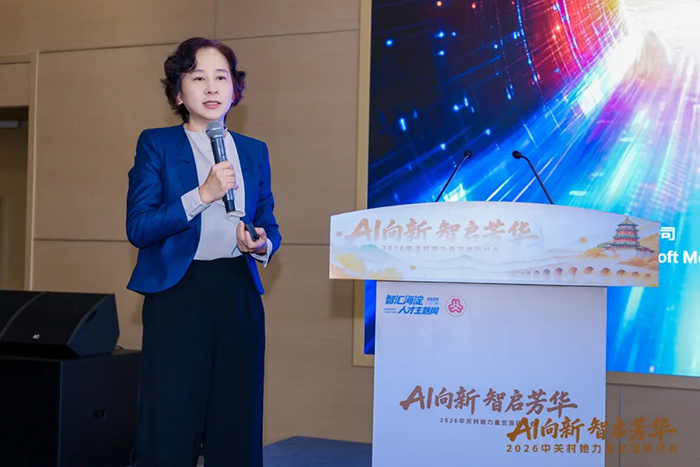
Chen Bingshu, Vice President of Neusoft Medical Systems and Dean of its Innovation Research Institute, drew on frontline experience in healthcare to explain that “machines can help, but they cannot replace people in making the final call.” She stressed that AI should not be developed for technology’s sake. Instead, it should begin by identifying the actual problem to be solved, followed by finding the right tool for the job.
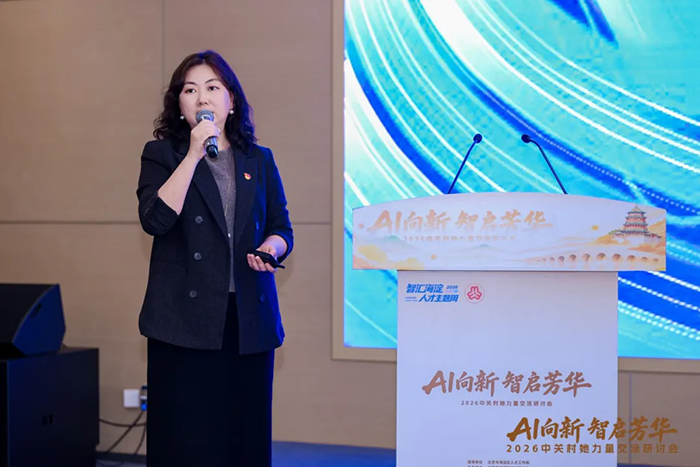
Ying Yufei, Vice President of the Zhongguancun Zhiyou Research Institute, addressed the challenge of turning technology into products and securing customers willing to pay for them. She noted that China’s AI industry has developed a model of “reverse innovation,” in which technology R&D is guided by the real needs of industrial applications.
Roundtable Discussion: Exploring Four Key Questions About AI
Seeking Answers to the Questions of Our Time
The roundtable discussion of the forum centered on the four questions of our time on artificial intelligence raised by President Xi Jinping at the 2026 World AI Conference: human-machine coexistence, algorithmic security, technology ethics and digital inclusion. Four panelists exchanged views on issues including the boundaries of embodied intelligence, proactive governance rule-making, dual human–AI sign-off in medical decisions, and technology accessibility for small and medium-sized enterprises. Amid tea and conversation, questions about technology met reflections on culture, bringing a sense of calm and warmth to the discussion of cutting-edge issues. The traditional setting of gathering around a stove to brew tea became an opportunity for thoughtful reflection on where AI is headed.
Sharing Insights and Gathering Golden Ideas for AI Development
Pooling Women’s Wisdom
Focusing on how AI can empower women’s development across industries, the Haidian District Women’s Federation solicited opinions and suggestions from women across the district in the run-up to the event, gathering their insights and listening to their voices. Of nearly 100 submissions received, four proposals were selected for their authors to present in person at the forum. Wang Peng, Director of the Cooperation and Development Department at Zhongguancun Academy, proposed incorporating women’s perspectives at an early stage throughout the entire process, from AI R&D and algorithm evaluation to the allocation of industrial resources. Liu Tong from Beijing Zhong Wen Law Firm focused on building AI-based safeguards for women’s safety in the digital age, particularly in addressing infringement risks and governance challenges associated with deep synthesis technologies. Cui Lili, Vice President of Tengyi Technology, argued that “the most important form of fairness in the AI era is equality in AI literacy,” and proposed establishing a pilot zone for AI literacy. Wang Xiaoxia, Associate Professor at Beijing Jiaotong University, called for a shift from narratives centered on role models to building the foundational infrastructure for proactive transformation, addressing the question of what women can contribute in the AI era. Liu Lan, Secretary of the Party Leadership Group and Chairwoman of the Haidian District Women’s Federation, responded by outlining the Federation’s efforts to leverage the district’s strengths in scientific and technological innovation. These efforts encourage women in Haidian District to actively embrace AI and digital technologies, continuously improve their digital literacy and keep pace with the times. Looking ahead, the Federation will continue to build platforms for exchanges among women and expand channels for outstanding women to offer suggestions. It will also make full use of platforms such as the people’s congresses and the Chinese People’s Political Consultative Conference to bring together women’s voices and encourage them to contribute ideas and proposals. By giving full play to women’s unique role in scientific and technological innovation and social governance, the Federation aims to pool women’s wisdom and unleash their potential, contributing women’s strength to Haidian District’s efforts to achieve a high level of self-reliance and strength in science and technology.
Since its inaugural session in 2021, the Zhongguancun Women’s Power Forum has been held for six consecutive sessions. From its early focus on women’s participation in scientific and technological innovation to this year’s exploration of women’s positioning in AI empowerment across industries, the six sessions have documented the practical experiences and reflections of women innovators in Haidian District at different stages of technological development. This year’s forum was also an important part of the 2026 Haidian Talent Week.